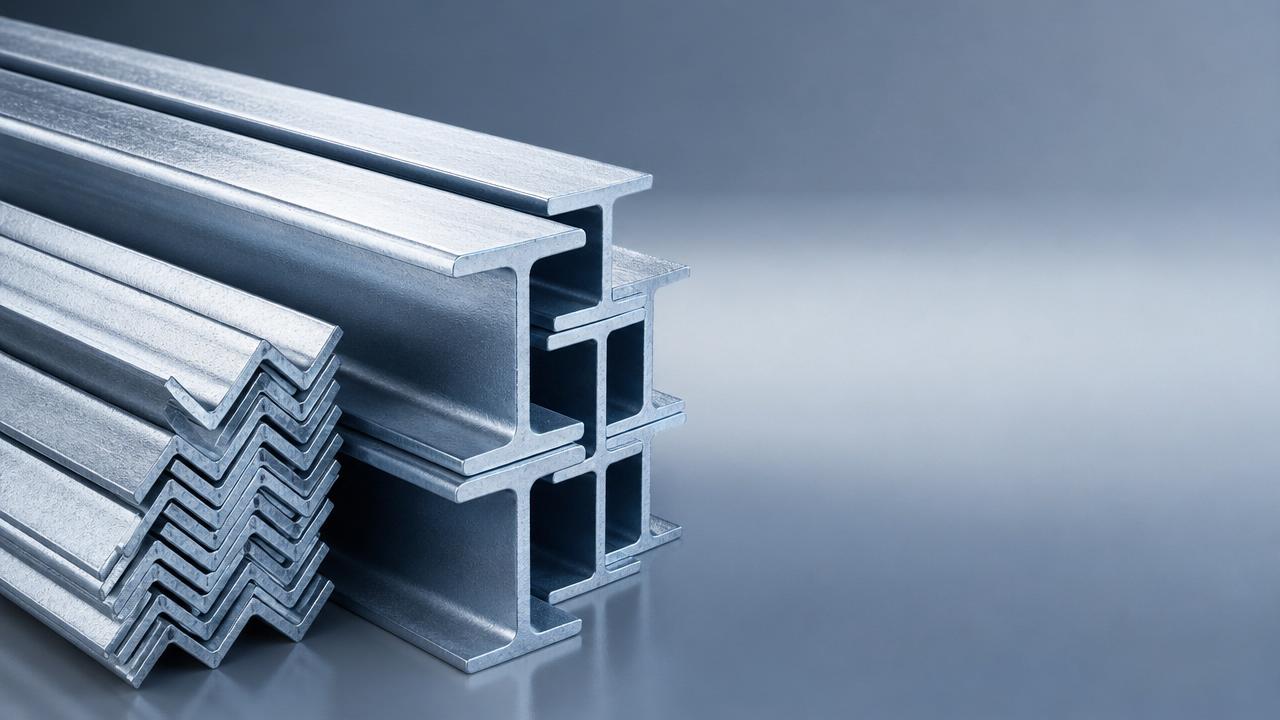
Vietnam has introduced a carbon-intensity-based tariff system for imported galvanized structural sections, effective 1 June 2026. The policy marks the country’s first sector-specific climate-linked trade measure and signals a broader shift toward embedding environmental performance into import regulation—particularly for energy-intensive metal products.
Event Overview
The Ministry of Industry and Trade (MOIT) issued Notification No. 31/2026/TT-BCT on 12 May 2026, amending import tariff schedules for HS code 7308.90 (galvanized structural sections). Under the new mechanism, applicable Most-Favoured-Nation (MFN) tariffs will vary by carbon intensity tier: 12% for Tier A (GWP ≤ 0.8 kg CO₂-eq/kg), 20% for Tier B (0.8–1.5), and 28% for Tier C (>1.5). A transitional period runs from 1 June to 31 December 2026, during which Life Cycle Assessment (LCA) reports accredited by China’s National Accreditation Service for Conformity Assessment (CNAS) are accepted.
Industries Affected
Direct trading enterprises face immediate cost volatility and compliance complexity. Because tariff rates now depend on verifiable upstream emissions data—not just origin or value—they must coordinate closely with foreign suppliers to obtain certified LCA reports, verify methodology alignment, and manage customs classification risks. Failure to submit valid documentation may trigger reclassification into Tier C, incurring an effective tariff increase of up to 16 percentage points over baseline.
Raw material procurement enterprises—especially those sourcing steel substrates or zinc coatings from third countries—are exposed to indirect carbon liability. Even if their own facilities operate efficiently, upstream GWP values embedded in purchased inputs determine final tariff classification. This shifts procurement strategy from pure cost or quality focus toward traceable low-carbon sourcing, including contractual clauses requiring GWP disclosure and audit rights.
Processing and manufacturing enterprises exporting finished galvanized sections from Vietnam (e.g., fabricators applying secondary coating or cutting) may experience upstream cost pressure. While the tariff applies at import, domestic producers relying on imported semi-finished goods—such as hot-dip galvanized coils or profiles—will absorb higher landed costs, compressing margins unless they pass through selectively or optimize process-level emissions to qualify for lower-tier certification downstream.
Supply chain service providers, including customs brokers, LCA consultants, and certification bodies, face both opportunity and operational risk. Demand for cross-border LCA validation and tariff classification advisory services is rising—but MOIT’s acceptance criteria (e.g., CNAS recognition only during transition) creates jurisdictional uncertainty. Providers must clarify scope limitations and avoid implying equivalence between national accreditation systems absent formal mutual recognition.
Key Considerations and Response Measures
Verify LCA report eligibility before shipment
Exporters must confirm whether their LCA provider holds current CNAS accreditation *and* whether the report covers the exact product configuration (e.g., thickness, coating mass, substrate grade) declared under HS 7308.90. MOIT explicitly excludes generic or aggregated industry-average LCAs.
Assess tier exposure using actual production data—not benchmarks
Many exporters assume default Tier B classification based on regional averages. However, MOIT requires site- and batch-specific GWP calculation per ISO 14040/44. Companies with electric arc furnace (EAF) routes, scrap-rich feeds, or renewable-powered galvanizing lines may qualify for Tier A—even from high-emission jurisdictions—if verified.
Prepare for post-transition requirements
After December 2026, MOIT intends to require accreditation under Vietnam’s national scheme (VNAS) or ILAC-MRA signatory bodies. Enterprises should map current LCA providers against this timeline and initiate pre-audit readiness assessments no later than Q3 2026.
Editorial Perspective / Industry Observation
Observably, this is not merely a tariff adjustment but an early test of how emerging economies operationalize carbon border mechanisms outside WTO-consistent CBAM frameworks. Unlike the EU’s CBAM—which targets direct emissions only—Vietnam’s model incorporates full cradle-to-gate GWP, including upstream electricity and raw material extraction. Analysis shows that such granularity increases administrative burden but also creates clearer incentives for decarbonization investment along the entire supply chain. From an industry perspective, the phased rollout suggests MOIT prioritizes feasibility over speed—yet the 12–28% spread confirms serious intent to price carbon differentiation.
Conclusion
This policy represents a calibrated step toward climate-aligned trade governance in Southeast Asia. It does not replace existing MFN duties but overlays them with environmental accountability—making carbon performance a tradable attribute. For global exporters, it reinforces that regulatory convergence on embodied carbon is accelerating beyond advanced economies—and that ‘low-carbon’ must now be demonstrated, not asserted.
Source Attribution
Official source: Vietnam Ministry of Industry and Trade (MOIT), Notification No. 31/2026/TT-BCT, published 12 May 2026. Full text available via MOIT’s Legal Document Portal (https://vanban.moit.gov.vn). Note: MOIT has indicated that implementation guidelines—including acceptable LCA methodologies, verification protocols, and VNAS accreditation timelines—remain pending publication and are subject to revision. These documents warrant close monitoring through Q3 2026.
Related Posts
- ▶ Australia's Coking Coal Exports Surge 20% YoY in April 2026
- ▶ US CBP Tightens Steel Origin Verification for H-Beams & I-Beams
- ▶ Iran opens Strait of Hormuz for commercial vessels during ceasefire, risks remain
- ▶ Tata Steel Faces Closure of Coking Units in the Netherlands
- ▶ Nucor Raises Hot-Rolled Coil Prices Again by $10 per Ton in U.S.
- ▶ Global pig iron prices rose by $5–20 per ton in the first half of March
- ▶ Nucor Raises HRC Price to $1,010/Ton - 8th Weekly Increase
- ▶ Tata Steel UK raises hot-rolled coil prices by £125/t
- ▶ Global Steel Production Drops 6.5% in January 2026
- ▶ EU Parliament Seeks Ban on Russian Steel Imports
Online Message


Leave A Message
If you are interested in our products and want to know more details, please leave a message here, we will reply you as soon as we can.