NEWS
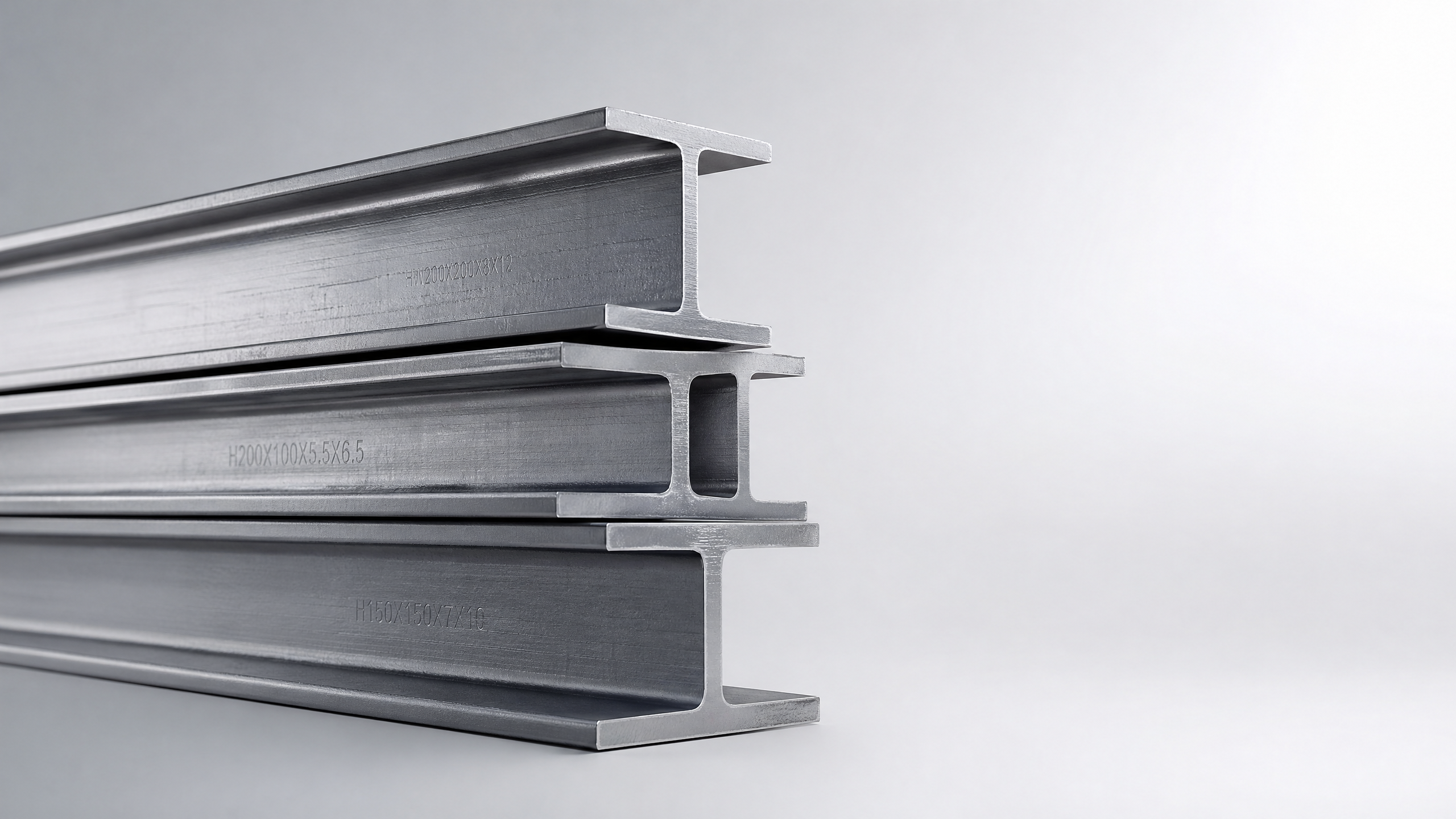
On April 28, 2026, U.S. Customs and Border Protection (CBP) updated its Steel Import Compliance Guidance, mandating full-chain traceability documentation for imported structural steel products—including H-beams, I-beams, and channels. This development directly affects exporters, importers, and supply chain service providers engaged in the North American structural steel trade, particularly those handling Chinese-origin material, due to heightened anti-circumvention scrutiny.
Event Overview
Effective April 28, 2026, U.S. Customs and Border Protection (CBP) formally revised its Steel Import Compliance Guidance. Under the update, importers of H-beams, I-beams, and channel sections must submit, at time of entry, verifiable origin documentation covering all stages: smelting, hot rolling, warehousing, and export loading. Required documents include English-language mill certificates, heat-lot traceability tables, and third-party inspection reports. The measure is explicitly tied to mitigating anti-circumvention investigation risks.
Impact on Specific Industry Segments
Direct Trading Enterprises
Trading companies acting as U.S. importers of record face immediate operational impact: they are now legally responsible for collecting, validating, and submitting end-to-end traceability files. Failure to provide complete, consistent, and English-compliant documentation may result in entry delays, requests for information (RFIs), or outright refusal of release.
Raw Material Procurement Entities
Buyers sourcing structural steel from upstream mills—especially in China—must now coordinate with suppliers to secure granular production data (e.g., furnace batch numbers, rolling dates, storage location logs). This adds complexity to procurement contracts and increases lead time for document preparation, as many mills do not routinely generate or retain such detailed English-language records.
Manufacturing and Fabrication Firms
U.S.-based fabricators importing semi-finished or finished structural sections for downstream assembly must verify upstream compliance before placing orders. Their internal quality and compliance teams now need to assess supplier documentation capacity—not just product specifications—making pre-qualification more rigorous and time-intensive.
Supply Chain and Logistics Service Providers
Third-party logistics (3PL) firms, customs brokers, and freight forwarders supporting steel imports must adapt their document intake and verification workflows. They are increasingly expected to flag inconsistencies across mill certs, lot tables, and inspection reports—requiring staff trained in metallurgical process logic and CBP documentation expectations.
What Relevant Enterprises or Practitioners Should Focus On Now
Monitor official CBP implementation guidance and enforcement patterns
While the policy took effect April 28, 2026, CBP has not yet published detailed instructions on acceptable formats, digital submission protocols, or audit frequency. Observably, early enforcement appears focused on high-volume entries and cases involving prior anti-dumping or countervailing duty orders—making close tracking of CBP bulletins essential.
Prioritize documentation readiness for high-risk SKUs and origin profiles
Analysis shows that H-beams and I-beams originating from jurisdictions under active Section 232 or AD/CVD orders—particularly China—are subject to higher scrutiny. Companies should triage current and planned shipments by origin country, product grade, and tariff line to allocate documentation resources efficiently.
Distinguish between regulatory signal and operational requirement
The updated guidance is a binding compliance requirement—not a voluntary best practice. However, CBP’s current emphasis remains on documentation completeness and logical consistency (e.g., matching heat numbers across certificates and inspection reports), rather than real-time factory audits or blockchain-based verification. Current enforcement does not mandate new technology adoption, only verifiable paper/electronic trails.
Initiate cross-functional alignment on procurement, compliance, and logistics handoffs
Preparing compliant files requires coordination among purchasing, quality assurance, logistics, and customs departments. Companies are advised to map current documentation handoff points, identify gaps (e.g., missing English translations, inconsistent lot numbering), and formalize internal checklists aligned with CBP’s stated requirements—before shipment, not at port.
Editorial Perspective / Industry Observation
This update is better understood as an operational escalation within existing trade enforcement frameworks—not a new regulatory regime. Analysis shows it reflects CBP’s shift toward upstream traceability as a proxy for origin integrity, especially where transshipment or processing-in-third-countries raises anti-circumvention concerns. From an industry perspective, it signals growing expectations for transparency deeper into the production chain, beyond traditional country-of-origin labeling. It is neither a temporary pilot nor a fully matured system; rather, it marks a transitional phase where documentation rigor is becoming a de facto entry barrier for structural steel. Continued monitoring is warranted, as CBP may extend similar requirements to other steel product categories based on enforcement learnings.
Conclusion
This CBP update underscores that origin verification for structural steel is no longer limited to country-of-export declarations—it now demands auditable evidence spanning metallurgical and logistical processes. For affected enterprises, the immediate priority is not strategic repositioning, but procedural discipline: ensuring documentation aligns precisely with CBP’s stated scope and format expectations. The measure is best interpreted not as a market access restriction per se, but as a compliance threshold that elevates documentation quality from administrative formality to core supply chain capability.
Information Sources
Main source: U.S. Customs and Border Protection, Steel Import Compliance Guidance (revised edition, effective April 28, 2026).
Points requiring ongoing observation: CBP’s forthcoming FAQs, enforcement case summaries, and potential expansion to additional steel product categories (e.g., hollow structural sections or rebar) remain unconfirmed and are subject to future updates.
Related Posts
- ▶ US CBP Tightens Steel Origin Verification for H-Beams & I-Beams
- ▶ Iran opens Strait of Hormuz for commercial vessels during ceasefire, risks remain
- ▶ Tata Steel Faces Closure of Coking Units in the Netherlands
- ▶ Nucor Raises Hot-Rolled Coil Prices Again by $10 per Ton in U.S.
- ▶ Global pig iron prices rose by $5–20 per ton in the first half of March
- ▶ Nucor Raises HRC Price to $1,010/Ton - 8th Weekly Increase
- ▶ Tata Steel UK raises hot-rolled coil prices by £125/t
- ▶ Global Steel Production Drops 6.5% in January 2026
- ▶ EU Parliament Seeks Ban on Russian Steel Imports
- ▶ Nucor raises prices for hot-rolled coil in the US for the second week in a row
Online Message


Leave A Message
If you are interested in our products and want to know more details, please leave a message here, we will reply you as soon as we can.