NEWS
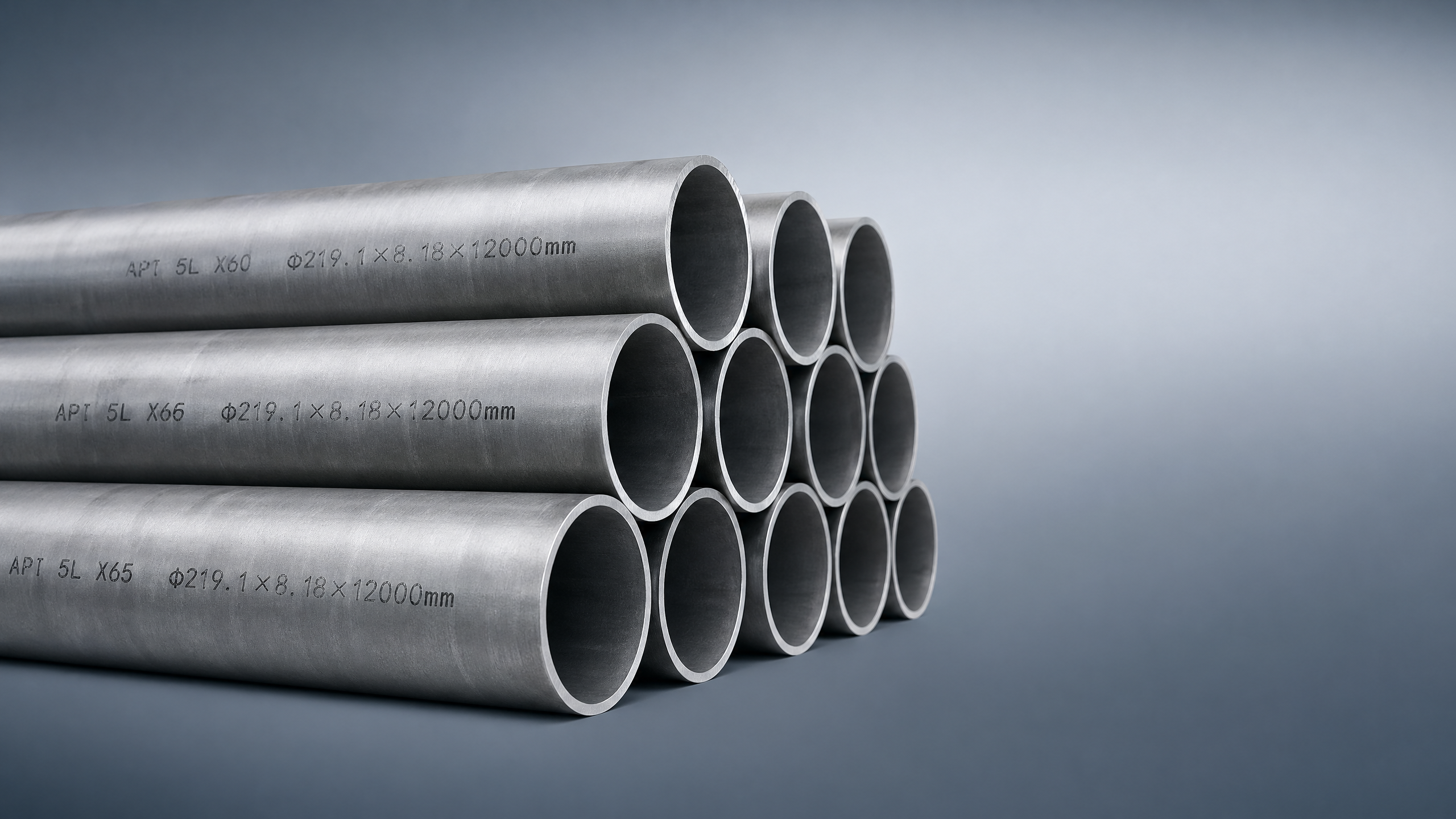
As of April 28, 2026, easing geopolitical tensions in the Middle East have triggered renewed procurement activity for API 5L X60/X65 seamless pipes—particularly by ADNOC (UAE) and Aramco (Saudi Arabia)—making oil & gas infrastructure suppliers, international pipe traders, and logistics service providers key stakeholders to monitor closely. This development signals a near-term shift in regional capital expenditure execution and export demand patterns for Chinese steel pipe manufacturers.
Event Overview
On April 28, 2026, it was confirmed that ADNOC and Aramco had restarted multiple pipeline engineering tenders. As a result, import demand for API 5L X60/X65 seamless pipes rose 41% month-on-month. Leading Chinese seamless pipe producers—including Baotou Steel and Tianjin Pipe Corporation—reported average delivery lead times shortened to 35 days, down 12 days from Q4 2025, attributed to stable production scheduling and direct port warehouse dispatch capabilities. End users in the Middle East indicated that ‘full specification coverage + controllable vessel schedules’ has become a core technical evaluation criterion for selecting Chinese suppliers on project-basis.
Industries Affected
Direct Trading Enterprises
Companies engaged in cross-border seamless pipe trade face immediate shifts in order timing and specification mix. The 41% MoM demand surge reflects accelerated tendering cycles—not yet full contract awards—meaning trading firms must align inventory planning with bid timelines rather than shipment forecasts alone.
Raw Material Procurement Enterprises
Firms sourcing billets or hot-rolled rounds for seamless pipe production may see short-term pressure on spot availability of X60/X65-grade raw inputs, especially if domestic mills prioritize export orders amid tighter delivery windows. Monitoring billet price volatility and furnace utilization rates in North China becomes more critical.
Manufacturing Enterprises (Seamless Pipe Producers)
Producers are directly impacted by the tightening of delivery expectations: the industry benchmark has shifted from ~47 days (Q4 2025) to 35 days. This compresses internal process buffers—especially for heat treatment, NDT, and coating stages—and increases dependency on coordinated logistics handoffs at port terminals.
Supply Chain Service Providers
Third-party inspection agencies, freight forwarders, and port warehouse operators must adapt to shorter notice-to-load intervals. The emphasis on ‘controllable vessel schedules’ implies higher demand for real-time slot visibility and pre-clearance coordination—particularly for UAE and Saudi destinations under ADNOC/Aramco’s strict logistics protocols.
What Relevant Enterprises or Practitioners Should Focus On
Track official tender award announcements—not just tender launches
ADNOC and Aramco have resumed bidding, but actual contract awards remain pending. Firms should distinguish between procurement intent (tender issuance) and procurement execution (award + PO issuance), as the latter drives firm order intake and production allocation.
Monitor X60/X65 seamless pipe order books and port loading capacity in Tianjin and Qingdao
Given the reported 35-day lead time achievement, port congestion or terminal slot shortages could become bottlenecks. Companies should assess current berth availability and container/flat-rack equipment readiness at major export hubs serving Middle East routes.
Validate specification coverage against ADNOC Standard SAES-L-132 and Aramco SABIC standards
‘Full specification coverage’ refers not only to grade (X60/X65) but also dimensional tolerances, testing requirements (e.g., hydrostatic, ultrasonic), and documentation (e.g., MTR traceability). Suppliers must confirm alignment with latest revision cycles of these client-specific standards before quoting.
Prepare contingency plans for billet supply continuity
A sustained uptick in X60/X65 orders may strain billet supply chains, particularly if domestic mills divert billets toward export-focused seamless production. Procurement teams should review billet supplier lead times and identify alternate sources with certified chemistry and mechanical property compliance.
Editorial Perspective / Industry Observation
Observably, this development is best understood as an early-cycle procurement signal—not yet a broad-based market recovery. The 41% MoM increase reflects targeted, project-level demand reactivation rather than systemic growth across all Middle East oil & gas infrastructure segments. Analysis shows delivery performance (not just pricing or certification) has now become a de facto technical differentiator in competitive bidding; this elevates operational reliability to the same tier as metallurgical compliance. From an industry perspective, the shift underscores that upstream procurement decisions are increasingly contingent on downstream logistics integration—making port coordination capability a measurable component of technical qualification.
Conclusion
This update reflects a tactical recalibration in Middle East energy infrastructure procurement—not a structural rebound. It highlights how geopolitical stabilization translates into measurable, near-term export demand for specific seamless pipe grades, while simultaneously raising the bar for delivery discipline among Chinese suppliers. Current conditions are better interpreted as a test of operational responsiveness, rather than an indicator of sustained volume growth.
Source Attribution
Main source: Confirmed tender restarts and demand data reported as of April 28, 2026, by ADNOC and Aramco procurement channels; delivery performance metrics from Baotou Steel and Tianjin Pipe Corporation public updates. Ongoing observation required for tender award outcomes and Q2 2026 shipment volumes.
Related Posts
- ▶ US CBP Tightens Steel Origin Verification for H-Beams & I-Beams
- ▶ Iran opens Strait of Hormuz for commercial vessels during ceasefire, risks remain
- ▶ Tata Steel Faces Closure of Coking Units in the Netherlands
- ▶ Nucor Raises Hot-Rolled Coil Prices Again by $10 per Ton in U.S.
- ▶ Global pig iron prices rose by $5–20 per ton in the first half of March
- ▶ Nucor Raises HRC Price to $1,010/Ton - 8th Weekly Increase
- ▶ Tata Steel UK raises hot-rolled coil prices by £125/t
- ▶ Global Steel Production Drops 6.5% in January 2026
- ▶ EU Parliament Seeks Ban on Russian Steel Imports
- ▶ Nucor raises prices for hot-rolled coil in the US for the second week in a row
Online Message


Leave A Message
If you are interested in our products and want to know more details, please leave a message here, we will reply you as soon as we can.