NEWS
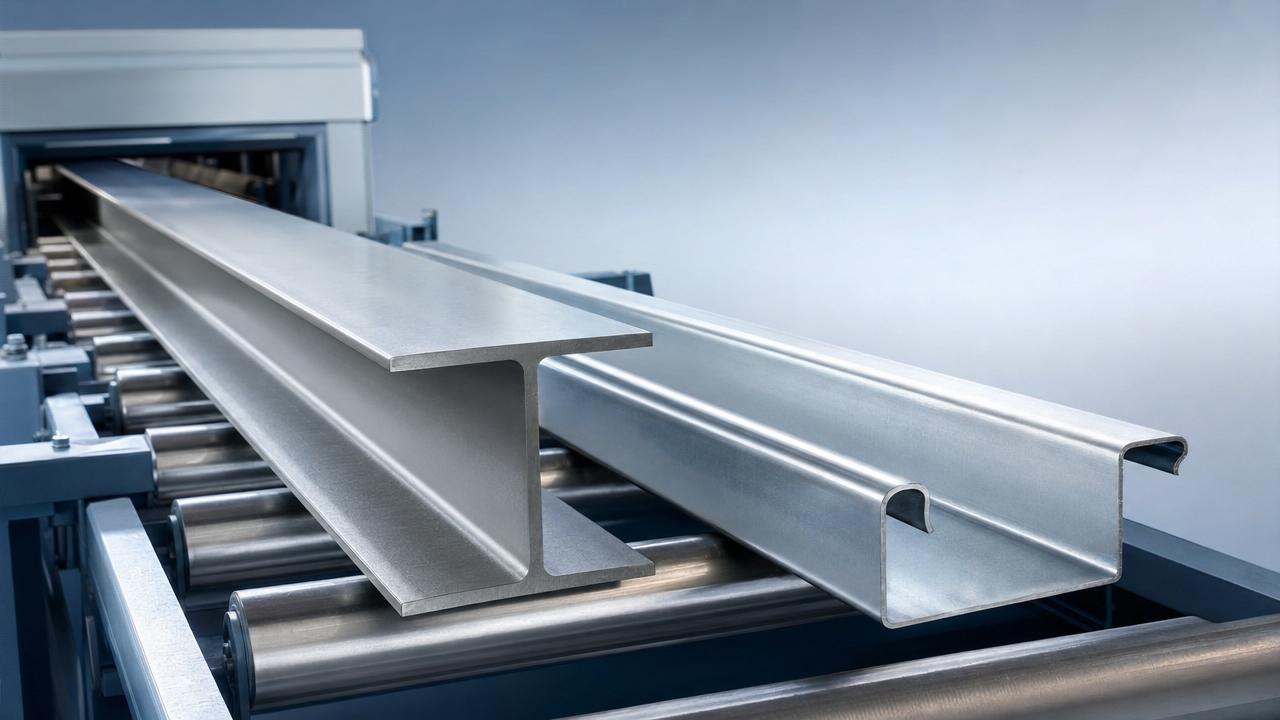
Starting May 1, 2026, Indonesia implements its Nickel Ore and Nickel Intermediate Export Permit Dynamic Quota System, requiring all nickel pig iron (NPI) exports to be pre-declared by end-use and linked to registered downstream products. This development directly affects Chinese manufacturers of hot-dip galvanized structural steel—including H-beams and C/Z purlins—whose zinc-nickel alloy coating formulations rely on imported NPI. Buyers specifying nickel-enhanced galvanizing (e.g., ASTM A1057 Class 2) must now reassess Chinese suppliers’ coating consistency and traceability documentation.
Event Overview
Effective May 1, 2026, Indonesia enforces the Nickel Ore and Nickel Intermediate Export Permit Dynamic Quota System. Under this regulation, all exports of nickel iron—including nickel pig iron (NPI)—must be accompanied by advance declaration of intended end-use and binding registration of the corresponding downstream final product. The policy is officially in force as of the stated date; no transitional period or phased rollout has been publicly announced.
Impact on Specific Industry Segments
Direct Trading Enterprises: Exporters and importers handling NPI shipments between Indonesia and China face new administrative requirements. Compliance hinges on accurate end-use classification and alignment with pre-registered terminal products—introducing delays and documentation risk if declarations are incomplete or misaligned.
Raw Material Procurement Entities: Chinese galvanizing material buyers sourcing NPI for zinc-nickel alloy production encounter tighter supply visibility and potential allocation constraints. Quota dynamics may lead to prioritization of domestic or ASEAN-based downstream users over third-country processors, affecting procurement lead times and unit cost stability.
Processing & Manufacturing Firms: Producers of hot-dip galvanized structural steel—including H-beams, C/Z purlins, and other coated building sections—face dual pressure: possible input cost volatility and increased scrutiny of coating composition compliance. ASTM A1057 Class 2–compliant deliveries now require verifiable nickel source traceability, extending internal quality documentation workflows.
Supply Chain Service Providers: Logistics, customs brokerage, and certification firms supporting NPI-related trade must adapt systems to validate purpose-bound export permits and cross-check registered end-product codes. Non-compliant documentation may trigger shipment holds or permit rejections at Indonesian ports.
What Relevant Enterprises Should Monitor and Do Now
Track official implementation guidance from Indonesian authorities
The Ministry of Energy and Mineral Resources (ESDM) and the Indonesia Investment Coordinating Board (BKPM) have not yet published detailed operational guidelines—for example, definitions of ‘downstream terminal product’, acceptable evidence formats for binding registration, or appeal mechanisms for quota allocation disputes. Monitoring these updates is essential before finalizing Q2 2026 procurement plans.
Verify current NPI supply contracts for end-use clause alignment
Importers and processors should review active supply agreements to confirm whether end-use declarations and downstream product registrations are contractually assigned—and whether liability for non-compliance rests with supplier, buyer, or shared. Contracts lacking such provisions may expose buyers to unplanned delays or substitution costs.
Distinguish between regulatory signal and operational impact
While the rule is effective May 1, 2026, actual enforcement intensity—such as frequency of permit audits or quota reallocation triggers—remains unconfirmed. Early-stage implementation may prioritize high-volume or high-value shipments; smaller consignments could experience less immediate disruption. Avoid assuming uniform application across all NPI grades or shipment sizes.
Prepare alternative sourcing pathways and internal traceability protocols
Firms relying on nickel-enhanced galvanizing should audit existing inventory and incoming NPI batches for origin and specification traceability. Concurrently, evaluate feasibility of partial formulation adjustments (e.g., reduced Ni content where performance permits) or engagement with alternate suppliers offering pre-registered, purpose-bound NPI streams.
Editorial Observation / Industry Perspective
Observably, this regulation marks a formal shift from Indonesia’s prior export restriction framework—focused on raw ore—to a more granular, value-chain-oriented control mechanism. It does not ban NPI exports outright but embeds them within a permissioned use model. Analysis shows this is less an immediate supply shock and more a structural recalibration: it elevates compliance burden, extends lead-time predictability risk, and incentivizes vertical integration or joint registration among trading partners. From an industry standpoint, the policy signals Indonesia’s intent to capture greater downstream value—not just through smelting, but via enforceable linkage to final manufactured goods. Continued monitoring is warranted, as quota allocation patterns and inter-agency coordination will determine real-world impact magnitude.
This development underscores how upstream mineral policy increasingly shapes midstream metallurgical formulation choices and downstream construction material certification pathways. It is best understood not as a temporary trade friction, but as a durable governance layer influencing global zinc-nickel alloy supply architecture.
Information Sources
Main source: Official announcement issued by the Indonesian Ministry of Energy and Mineral Resources (ESDM), dated April 2026, titled Regulation No. 12/2026 on Dynamic Quota Allocation for Nickel Ore and Nickel Intermediate Exports.
Points requiring ongoing observation: (1) Operational guidelines from BKPM or the Directorate General of Minerals and Coal; (2) Publicly disclosed quarterly quota allocation reports; (3) Verified case examples of permit approvals or rejections post–May 1, 2026.
Related Posts
- ▶ US CBP Tightens Steel Origin Verification for H-Beams & I-Beams
- ▶ Iran opens Strait of Hormuz for commercial vessels during ceasefire, risks remain
- ▶ Tata Steel Faces Closure of Coking Units in the Netherlands
- ▶ Nucor Raises Hot-Rolled Coil Prices Again by $10 per Ton in U.S.
- ▶ Global pig iron prices rose by $5–20 per ton in the first half of March
- ▶ Nucor Raises HRC Price to $1,010/Ton - 8th Weekly Increase
- ▶ Tata Steel UK raises hot-rolled coil prices by £125/t
- ▶ Global Steel Production Drops 6.5% in January 2026
- ▶ EU Parliament Seeks Ban on Russian Steel Imports
- ▶ Nucor raises prices for hot-rolled coil in the US for the second week in a row
Online Message


Leave A Message
If you are interested in our products and want to know more details, please leave a message here, we will reply you as soon as we can.