NEWS
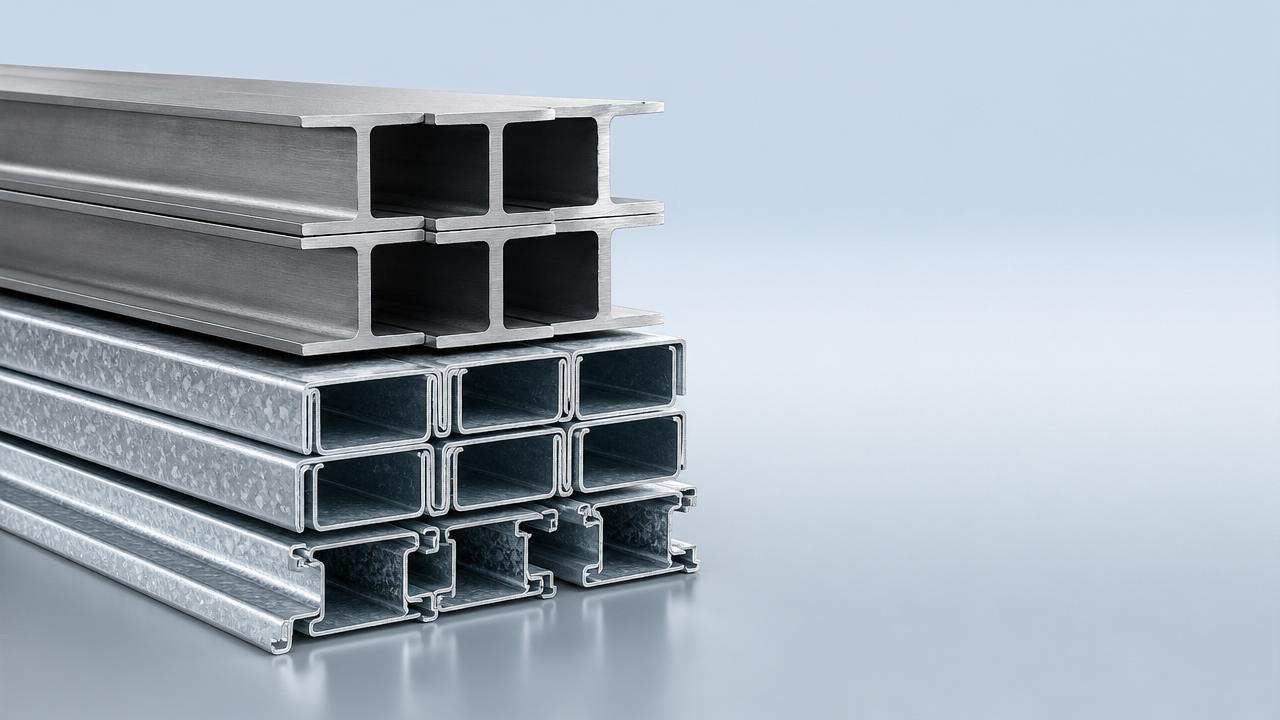
On 10 May 2026, the European Commission formally adopted an amendment expanding the Carbon Border Adjustment Mechanism (CBAM) to include hot-rolled H-beams, cold-formed galvanized C-purlins, and hot-dip galvanized structural profiles. Mandatory pre-declaration of embedded carbon emissions for exports to the EU begins 1 June 2026 — a development directly affecting manufacturers, exporters, and supply chain service providers engaged in structural steel trade with Europe.
Event Overview
The European Commission published the CBAM amendment on 10 May 2026. The regulation extends CBAM coverage to three specific steel product categories: hot-rolled H-beams, cold-formed galvanized C-purlins, and hot-dip galvanized structural profiles. From 1 June 2026, exporters must submit verified carbon emission data for these products prior to EU customs clearance. This pre-declaration is mandatory; failure to complete it may result in customs delays or shipment rejection.
Industries Affected by Segment
Direct Exporters of Structural Steel Products
Exporters supplying H-beams or galvanized structural profiles to the EU will face new compliance obligations. Impact arises from the requirement to collect, document, and verify facility-level Scope 1 and Scope 2 emissions for each consignment — a process not previously mandated under CBAM’s transitional phase. Operational impact includes added lead time for data submission, dependency on third-party verification, and risk of non-compliance penalties or clearance hold-ups.
Steel Rolling and Galvanizing Manufacturers
Domestic producers manufacturing the newly covered items — especially those operating integrated rolling + galvanizing lines — now bear primary responsibility for generating accurate, auditable carbon data. Their production records, energy consumption logs, and fuel sourcing documentation must align with CBAM reporting templates. Any inconsistency between production batch records and submitted emissions data may trigger verification queries or rejection of pre-declarations.
Supply Chain Service Providers (e.g., CBAM consultants, verification bodies, customs agents)
Service providers supporting CBAM compliance will see increased demand for technical assistance related to data collection frameworks, ISO 14064-aligned verification, and EU customs documentation preparation. However, this demand is contingent on clients’ readiness to engage — and on whether verification capacity within accredited bodies remains sufficient ahead of the 1 June deadline.
Key Focus Areas and Immediate Actions for Stakeholders
Monitor official CBAM Registry updates and guidance documents
The EU’s CBAM Transitional Registry portal is expected to publish updated reporting templates and sector-specific instructions for structural steel no later than mid-May 2026. Exporters and manufacturers should track announcements from the European Commission and national customs authorities for clarifications on data scope (e.g., whether upstream iron ore or scrap inputs must be included).
Prioritize data readiness for high-volume export SKUs
Not all H-beam or galvanized profile variants carry equal export volume. Companies should identify top-5 SKUs by EU shipment value and initiate carbon data mapping for those lines first — including furnace type, coating method, energy mix, and electricity procurement contracts — to avoid last-minute bottlenecks.
Distinguish between regulatory signal and enforceable obligation
The 1 June 2026 date marks the start of mandatory pre-declaration, but full financial liability under CBAM (i.e., purchase of CBAM certificates) remains scheduled for 2027. Current obligations are procedural — focused on transparency and verification — not direct cost imposition. Businesses should avoid conflating pre-declaration requirements with imminent tariff payments.
Align internal teams and external partners ahead of the deadline
Manufacturing, quality assurance, logistics, and compliance functions must coordinate data handoffs. Where third-party verifiers are engaged, contracts and scope-of-work agreements should be finalized by 20 May 2026 to allow for at least one verification cycle before 1 June. Customs brokers handling EU filings should confirm system compatibility with the latest CBAM declaration fields.
Editorial Perspective / Industry Observation
Observably, this expansion signals a deliberate shift from CBAM’s initial focus on basic raw materials (e.g., crude steel, primary aluminium) toward downstream fabricated products — reflecting the EU’s intent to capture embodied emissions across broader segments of industrial value chains. Analysis shows that inclusion of galvanized profiles — which often involve multiple processing steps and variable coating thicknesses — introduces greater complexity in emissions attribution than earlier CBAM-covered commodities. This move is best understood not as a final policy endpoint, but as a procedural milestone confirming the mechanism’s trajectory toward deeper supply chain scrutiny. Continued monitoring is warranted, particularly for potential follow-up expansions to other coated or cold-formed steel sections beyond the current scope.
The significance lies less in immediate cost impact and more in operational recalibration: it formalizes carbon data as a core trade document, comparable in priority to commercial invoices or origin certificates. For affected enterprises, the most constructive interpretation is that CBAM pre-declaration has evolved from a pilot exercise into a binding procedural gate — one that tests readiness across data governance, cross-functional coordination, and external verification infrastructure.
Information Sources
Main source: European Commission Official Journal notice C(2026) 2871, published 10 May 2026.
Areas requiring ongoing observation: Further guidance on methodology for galvanized product emissions allocation, and timing of national customs authority readiness notifications for CBAM pre-declaration integration.
Related Posts
- ▶ Australia's Coking Coal Exports Surge 20% YoY in April 2026
- ▶ US CBP Tightens Steel Origin Verification for H-Beams & I-Beams
- ▶ Iran opens Strait of Hormuz for commercial vessels during ceasefire, risks remain
- ▶ Tata Steel Faces Closure of Coking Units in the Netherlands
- ▶ Nucor Raises Hot-Rolled Coil Prices Again by $10 per Ton in U.S.
- ▶ Global pig iron prices rose by $5–20 per ton in the first half of March
- ▶ Nucor Raises HRC Price to $1,010/Ton - 8th Weekly Increase
- ▶ Tata Steel UK raises hot-rolled coil prices by £125/t
- ▶ Global Steel Production Drops 6.5% in January 2026
- ▶ EU Parliament Seeks Ban on Russian Steel Imports
Online Message


Leave A Message
If you are interested in our products and want to know more details, please leave a message here, we will reply you as soon as we can.