NEWS
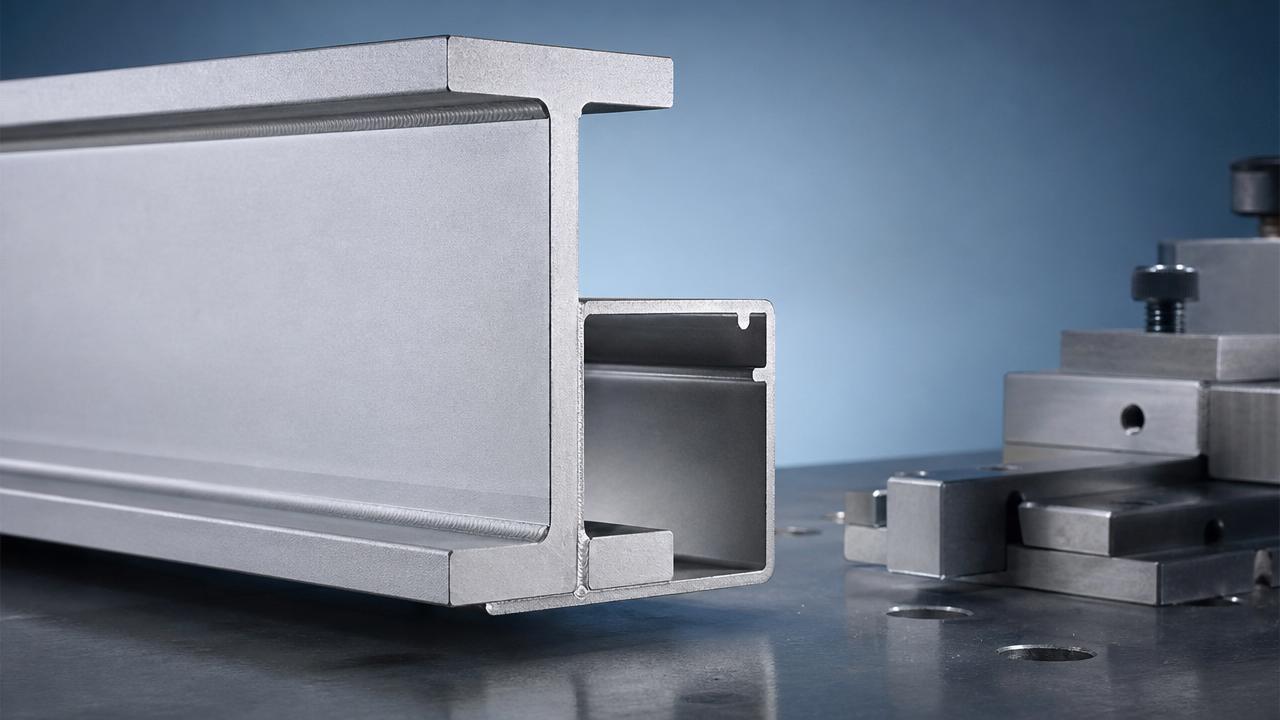
Starting 1 May 2026, the revised EU structural steel standard EN 1090-1:2026 becomes fully mandatory — for the first time bringing laser-welded sections (e.g., precision H-sections and thin-walled custom profiles) under EXC4 execution class requirements. This directly affects manufacturers supplying public buildings, bridges, and new-energy infrastructure projects in the EU.
Event Overview
Effective 1 May 2026, EN 1090-1:2026 enters full mandatory application across the European Union. The standard explicitly extends EXC4-level factory production control (FPC) requirements to laser-welded structural sections, including precision H-sections and non-standard thin-walled components. Compliance now necessitates both CE marking and independent third-party certification of FPC at EXC4 level. Products lacking both certifications will be excluded from EU public construction, bridge, and renewable energy infrastructure supply chains.
Which Subsectors Are Affected
Export-oriented manufacturing enterprises
These companies produce or assemble laser-welded structural sections for EU markets. They are directly responsible for CE marking and EXC4 FPC certification. Non-compliance means loss of market access for regulated project categories — particularly where public procurement rules apply.
Downstream fabricators and erectors
Fabricators sourcing laser-welded base materials (e.g., H-beams, custom profiles) must verify upstream suppliers’ dual certification status. Use of uncertified input material may invalidate their own EN 1090-2 compliance and expose them to contractual or liability risks in EU projects.
Procurement and supply chain management units
Organisations managing material sourcing for EU infrastructure tenders must now treat EXC4 certification as a mandatory pre-qualification criterion — not just a technical footnote. Certification validity, scope coverage (e.g., specific section geometries or thickness ranges), and surveillance frequency become contractually relevant evaluation parameters.
What Relevant Enterprises or Practitioners Should Focus On — And How to Respond Now
Confirm current certification scope against EN 1090-1:2026’s updated definitions
Manufacturers should review existing EXC4 FPC certificates to determine whether they explicitly cover laser-welded sections under the new standard’s definitions — especially regarding joint type, heat input limits, and dimensional tolerances. Pre-2026 EXC4 certifications may not automatically extend to laser welding processes unless reassessed and reissued.
Verify CE documentation alignment with EXC4-certified production conditions
CE declarations of conformity must reference an EXC4-certified FPC system that is actively maintained and audited. A standalone CE mark without valid, scope-appropriate EXC4 FPC certification is insufficient under EN 1090-1:2026 — and may constitute non-compliance during market surveillance.
Map product lines to EU project eligibility thresholds
Not all laser-welded sections fall under EXC4 by default. Enterprises should assess whether their products are intended for use in structures classified as EXC4 under EN 1090-2 (e.g., public buildings with high consequence of failure, long-span bridges, wind turbine support structures). Only those destined for such applications require dual certification.
Engage notified bodies early on process-specific FPC audits
Laser welding introduces distinct process variables (e.g., beam focus, shielding gas dynamics, cooling rates) not covered in traditional arc-welding FPC schemes. Early consultation with a notified body on audit readiness — including procedure qualification records (PQRs), welder approvals, and traceability systems — helps avoid delays ahead of the May 2026 deadline.
Editorial Perspective / Industry Observation
Observably, this change signals a formalisation of quality expectations for advanced joining methods in structural steel — moving beyond legacy arc-welding assumptions. Analysis shows EN 1090-1:2026 does not introduce new performance requirements per se, but rather tightens conformance assurance for high-precision fabrication techniques entering critical infrastructure. It is less a sudden regulatory shock and more a calibrated step reflecting increased reliance on laser-welded components in sustainable and modular construction. From the industry’s viewpoint, the requirement functions primarily as a gatekeeping mechanism for public-sector procurement — not a blanket restriction on commercial use. Continuous monitoring of EU Commission guidance notes and notified body interpretations remains advisable, as implementation details (e.g., transitional arrangements for existing stock) are still pending official clarification.
Ultimately, this regulation underscores how standards evolve to reflect technological adoption — not merely impose barriers. Its immediate effect is procedural: shifting certification responsibility upstream to component producers, while reinforcing traceability and process control as non-negotiable elements in EU structural supply chains.
Information Source: Official publication of EN 1090-1:2026 by CEN (European Committee for Standardization); EU Commission Implementing Decision references pending further notice. Transitional provisions and enforcement guidance remain under observation.
Related Posts
- ▶ US CBP Tightens Steel Origin Verification for H-Beams & I-Beams
- ▶ Iran opens Strait of Hormuz for commercial vessels during ceasefire, risks remain
- ▶ Tata Steel Faces Closure of Coking Units in the Netherlands
- ▶ Nucor Raises Hot-Rolled Coil Prices Again by $10 per Ton in U.S.
- ▶ Global pig iron prices rose by $5–20 per ton in the first half of March
- ▶ Nucor Raises HRC Price to $1,010/Ton - 8th Weekly Increase
- ▶ Tata Steel UK raises hot-rolled coil prices by £125/t
- ▶ Global Steel Production Drops 6.5% in January 2026
- ▶ EU Parliament Seeks Ban on Russian Steel Imports
- ▶ Nucor raises prices for hot-rolled coil in the US for the second week in a row
Online Message


Leave A Message
If you are interested in our products and want to know more details, please leave a message here, we will reply you as soon as we can.