NEWS
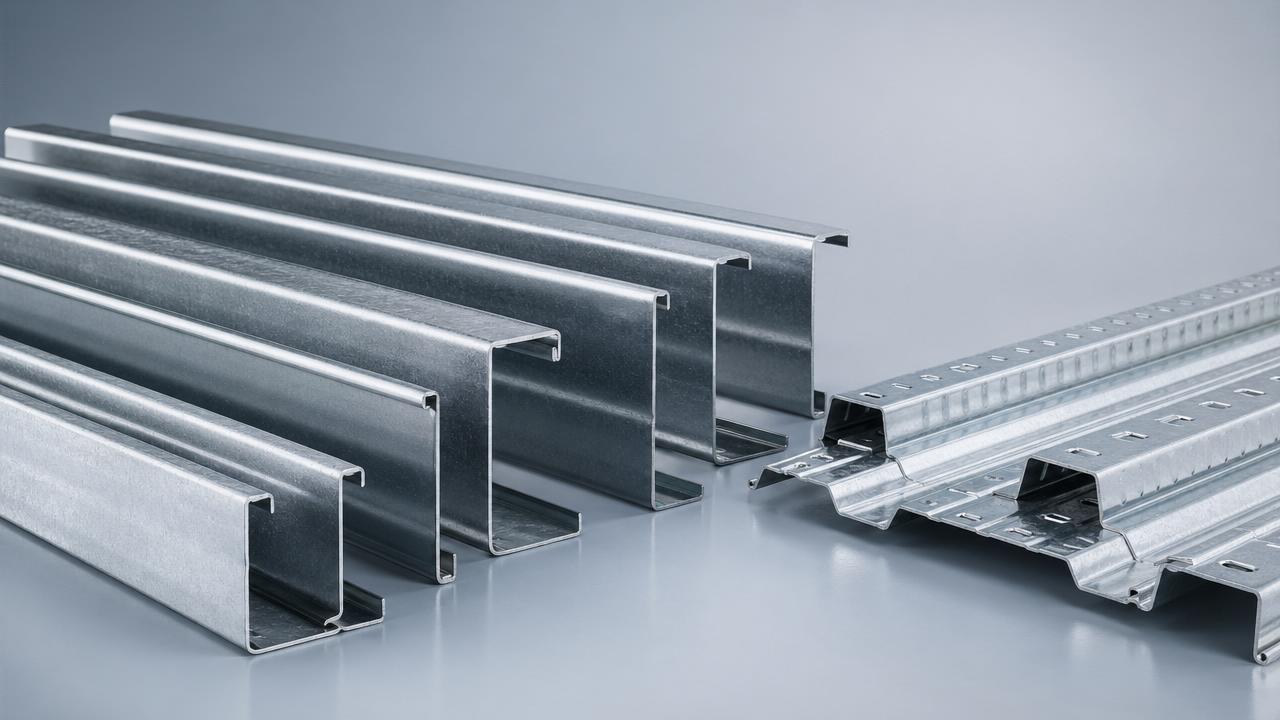
On April 28, 2026, U.S. Customs and Border Protection (CBP) issued supplemental guidance extending origin verification requirements to cold-formed steel products—including C-sections, Z-sections, and composite deck panels—used widely in solar mounting structures and low-rise building envelope systems. This development directly affects importers, fabricators, and suppliers engaged in U.S.-bound trade of structural steel components from China.
Event Overview
On April 28, 2026, U.S. Customs and Border Protection (CBP) published updated guidance specifying that cold-formed thin-walled structural steel products—such as C-shaped and Z-shaped sections and floor/deck panels—now fall under mandatory origin authenticity verification. Under the new requirement, importers must submit, at time of entry, full-process documentation from Chinese manufacturing facilities, including raw material procurement contracts, hot-dip galvanizing process parameters, laser cutting program sheets, and final inspection reports.
Industries Affected by Segment
Direct Trading Enterprises
Importers handling cold-formed steel products for U.S. delivery are now required to collect and validate upstream technical documentation prior to shipment. Impact manifests in extended customs clearance timelines, increased pre-shipment administrative burden, and higher risk of entry delays or requests for information (RFIs).
Raw Material Procurement Entities
Suppliers sourcing steel coils or galvanizing services for downstream cold-forming operations must ensure traceable, auditable records—from mill certification through coating batch logs—are available and aligned with CBP’s new submission expectations. Lack of granular procurement documentation may disrupt downstream export readiness.
Manufacturing & Fabrication Firms
Chinese producers of C/Z sections and decking face heightened internal documentation discipline. Laser cutting programs and galvanizing parameters—previously treated as proprietary or operational—must now be formalized, version-controlled, and export-ready. Non-standardized or undocumented shop-floor practices may trigger compliance gaps.
Supply Chain Service Providers
Third-party logistics providers, customs brokers, and certification bodies supporting steel imports must update their document review checklists and client advisories. Their role shifts toward verifying completeness and consistency across multi-tiered records—not just tariff classification or valuation accuracy.
What Enterprises and Practitioners Should Monitor and Do Now
Track Official Updates and Implementation Timelines
CBP’s April 28 guidance is a supplement—not a final rule—and may be followed by Federal Register notices, binding rulings, or enforcement memoranda. Enterprises should monitor CBP’s official website and related U.S. Department of Commerce communications for clarifications on scope, effective dates, and acceptable record formats.
Identify High-Risk Product Lines and Entry Points
Current focus targets cold-formed steel used in photovoltaic racking and low-rise construction envelopes. Companies should audit current U.S.-bound SKUs against Harmonized Tariff Schedule (HTS) codes 7308.90, 7308.30, and 7308.40 to confirm applicability. Entries via major ports such as Savannah, Los Angeles, and Newark warrant priority attention due to higher CBP scrutiny volume.
Distinguish Policy Signal from Operational Enforcement
While the guidance establishes a formal expectation, actual field-level enforcement intensity remains variable. Analysis shows early implementation is likely selective—centered on high-value shipments, repeat filers, or entries flagged by automated targeting algorithms. Routine audits may not begin uniformly until Q3 2026.
Prepare Documentation Protocols Across the Supply Chain
Importers should initiate internal alignment with Chinese suppliers to standardize documentation templates: e.g., bilingual procurement contracts referencing mill heat numbers; galvanizing logs noting bath temperature, immersion time, and post-treatment cooling method; and laser program files with timestamped revision history. Pre-clearance dry-runs with customs brokers are recommended before first post-guidance shipment.
Editorial Perspective / Industry Observation
Observably, this expansion reflects CBP’s shift from broad-category enforcement to product-specific, process-aware verification—particularly where trade growth intersects with strategic infrastructure sectors like solar energy. From an industry perspective, the requirement is less about immediate penalties and more about establishing a verifiable data trail across fabrication steps. It signals growing emphasis on *process transparency*, not just material origin. Current implementation appears calibrated as a regulatory signal rather than a fully scaled enforcement regime; sustained monitoring over the next 6–12 months will clarify whether it evolves into a systemic compliance checkpoint or remains a targeted risk-mitigation tool.
Conclusion
This guidance marks a procedural tightening—not a market restriction—but one that recalibrates documentation expectations across multiple tiers of the cold-formed steel supply chain serving U.S. construction and renewable energy markets. It is best understood not as a barrier, but as an operational pivot point: enterprises that treat documentation as integral to production—not merely a customs formality—will adapt with minimal friction.
Information Sources
Primary source: U.S. Customs and Border Protection (CBP), Supplemental Guidance Notice, April 28, 2026.
Note: Ongoing implementation details—including enforcement thresholds, acceptable digital formats, and potential exemptions—remain subject to further CBP communication and are currently under observation.
Related Posts
- ▶ US CBP Tightens Steel Origin Verification for H-Beams & I-Beams
- ▶ Iran opens Strait of Hormuz for commercial vessels during ceasefire, risks remain
- ▶ Tata Steel Faces Closure of Coking Units in the Netherlands
- ▶ Nucor Raises Hot-Rolled Coil Prices Again by $10 per Ton in U.S.
- ▶ Global pig iron prices rose by $5–20 per ton in the first half of March
- ▶ Nucor Raises HRC Price to $1,010/Ton - 8th Weekly Increase
- ▶ Tata Steel UK raises hot-rolled coil prices by £125/t
- ▶ Global Steel Production Drops 6.5% in January 2026
- ▶ EU Parliament Seeks Ban on Russian Steel Imports
- ▶ Nucor raises prices for hot-rolled coil in the US for the second week in a row
Online Message


Leave A Message
If you are interested in our products and want to know more details, please leave a message here, we will reply you as soon as we can.