NEWS
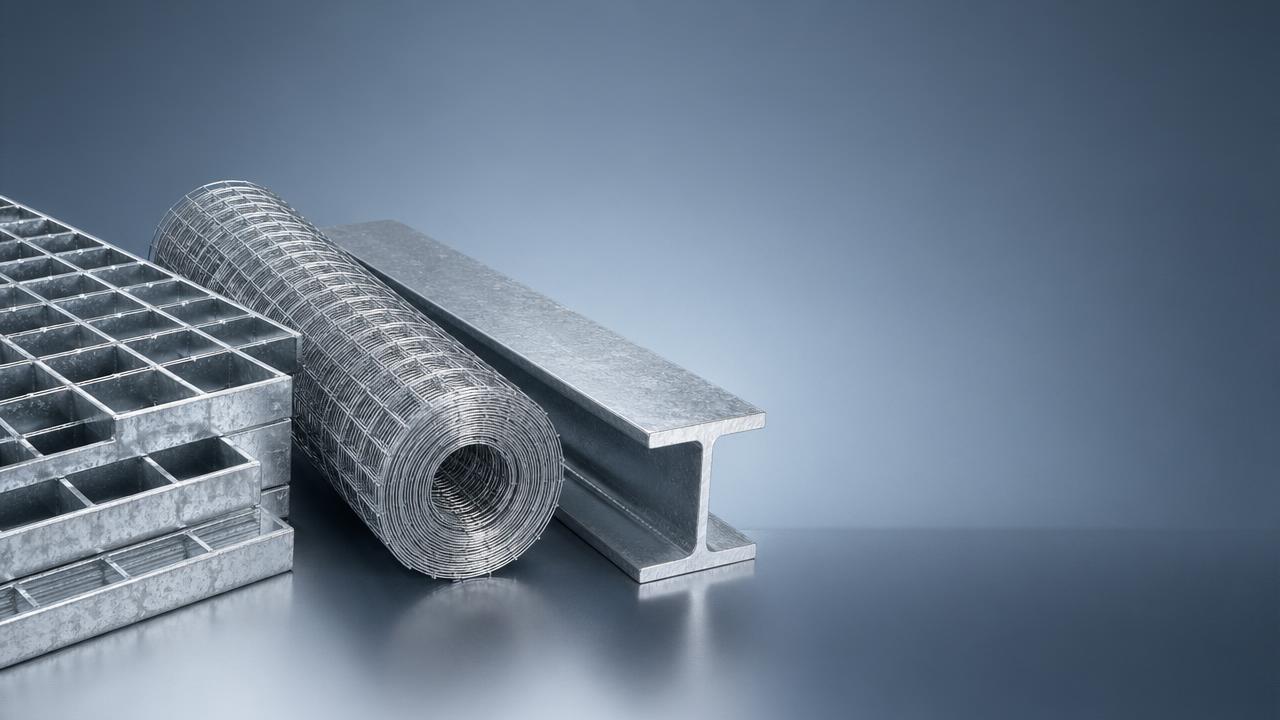
Brazil’s National Health Surveillance Agency (ANVISA) has expanded import regulatory requirements for metal products, effective 1 July 2026. The update — published on 30 April 2026 via Resolution RDC No. 231/2026 — newly subjects galvanized steel products (including galvanized wire mesh, grating, and structural profiles) to mandatory dual compliance verification under RoHS (Pb, Cd, Hg, Cr6+) and REACH (SVHC) frameworks. Importers must submit validated declarations from CNAS- or INMETRO-accredited laboratories with every customs declaration. Failure to provide both declarations results in non-acceptance of import license applications. This development directly affects manufacturers, traders, and distributors supplying galvanized steel into Brazil’s construction, infrastructure, and industrial equipment sectors.
Event Overview
On 30 April 2026, ANVISA issued an amendment to Annex of Resolution RDC No. 231/2026, formally adding galvanized steel items — specifically galvanized wire mesh, galvanized grating, and galvanized structural profiles — to the list of products subject to mandatory pre-import regulatory verification. As of 1 July 2026, all import declarations for these items must be accompanied by two concurrent compliance statements: one certifying conformity with EU RoHS Directive limits for lead, cadmium, mercury, and hexavalent chromium; and another confirming absence of substances of very high concern (SVHCs) listed under EU REACH Regulation. Both declarations must originate from laboratories accredited by either China’s CNAS or Brazil’s INMETRO. No exceptions or transitional allowances have been announced.
Industries Affected
Direct Trading Enterprises
Companies exporting galvanized steel products from Asia, Europe, or North America to Brazil will face immediate procedural impact. Since import licenses are withheld without dual declarations, shipment delays and customs rejections become likely if documentation is incomplete or lab accreditation status is unverified.
Raw Material Procurement Entities
Buyers sourcing galvanized steel coils, sheets, or semi-finished components for downstream fabrication must now ensure upstream suppliers can provide RoHS+REACH-compliant base materials — not just finished goods. Traceability from raw material smelting and coating processes becomes operationally relevant, as declarations may require batch-level testing evidence.
Processing & Manufacturing Firms
Domestic Brazilian fabricators that import galvanized substrates for cutting, welding, or assembly must treat each incoming consignment as a regulated input. Their internal quality control protocols now need to verify declaration validity (e.g., lab accreditation scope, test date, substance coverage), not only product specifications.
Supply Chain Service Providers
Customs brokers, freight forwarders, and trade compliance consultants handling Brazilian steel imports must update their document checklists and client advisories. Their service value increasingly hinges on verifying laboratory accreditation status and cross-referencing declared substances against current SVHC candidate lists — tasks beyond standard tariff classification support.
What Relevant Enterprises or Practitioners Should Focus On and How to Respond
Verify laboratory accreditation status before submission
Confirm that the issuing lab is explicitly accredited by CNAS or INMETRO for *both* RoHS elemental analysis and REACH SVHC screening — general ISO/IEC 17025 accreditation is insufficient unless scope documentation includes these specific test methods.
Review product categorization against ANVISA’s defined scope
ANVISA specifies three item types: galvanized wire mesh, galvanized grating, and galvanized structural profiles. Products outside this definition — e.g., hot-dip galvanized fasteners, pipes, or coated but non-structural sheet — are not currently covered. Do not assume broader applicability without official clarification.
Distinguish between policy issuance and operational enforcement
The regulation takes effect 1 July 2026, but ANVISA has not yet published implementation guidance on document format, digital submission channels, or grace periods for pending shipments. Monitor RDC No. 231/2026 updates and official notices via ANVISA’s Diário Oficial da União and INMETRO portals.
Initiate internal alignment across procurement, QA, and export teams
Ensure procurement contracts with suppliers include clauses requiring RoHS+REACH declarations for galvanized steel inputs; update QA checklists to include declaration validation steps; and brief export teams on new documentation timelines — especially given typical lab turnaround times of 7–10 working days for full dual-scope testing.
Editorial Perspective / Industry Observation
Observably, this measure marks ANVISA’s first extension of chemical safety oversight beyond medical devices and consumer health products into general industrial metals. Analysis shows it reflects a broader trend among emerging-market regulators to align with EU environmental standards — not necessarily for harmonization, but as a risk-based gatekeeping tool. From an industry perspective, this is less a standalone compliance event and more a signal that Brazil’s regulatory perimeter around imported manufactured goods is expanding incrementally along chemical safety lines. Current enforcement appears focused on documentation integrity rather than physical product sampling at ports — suggesting near-term impact will be administrative and procedural, not technical or analytical. However, sustained monitoring is warranted: ANVISA has historically used initial regulatory phases to gather data before tightening technical thresholds or extending scope.
Conclusion
This regulatory update does not introduce new substance limits or alter existing RoHS/REACH requirements. Rather, it imposes a formalized verification layer at the point of import for a previously unregulated category of metal products. Its primary significance lies in shifting responsibility upstream — from end-product conformity to supply chain transparency and documentation readiness. For affected stakeholders, the most rational interpretation is that this is an operational checkpoint expansion, not a technical standard revision. Preparedness should center on process alignment and documentation rigor — not reformulation or material substitution.
Information Sources
Main source: ANVISA Resolution RDC No. 231/2026, Annex amendment published 30 April 2026, effective 1 July 2026. Official text available via ANVISA’s legislation portal and Brazil’s Diário Oficial da União. Ongoing observation is required regarding potential clarifications on declaration format, accepted test methods, and enforcement procedures — none of which have been published as of the regulation’s issuance date.
Related Posts
- ▶ US CBP Tightens Steel Origin Verification for H-Beams & I-Beams
- ▶ Iran opens Strait of Hormuz for commercial vessels during ceasefire, risks remain
- ▶ Tata Steel Faces Closure of Coking Units in the Netherlands
- ▶ Nucor Raises Hot-Rolled Coil Prices Again by $10 per Ton in U.S.
- ▶ Global pig iron prices rose by $5–20 per ton in the first half of March
- ▶ Nucor Raises HRC Price to $1,010/Ton - 8th Weekly Increase
- ▶ Tata Steel UK raises hot-rolled coil prices by £125/t
- ▶ Global Steel Production Drops 6.5% in January 2026
- ▶ EU Parliament Seeks Ban on Russian Steel Imports
- ▶ Nucor raises prices for hot-rolled coil in the US for the second week in a row
Online Message


Leave A Message
If you are interested in our products and want to know more details, please leave a message here, we will reply you as soon as we can.